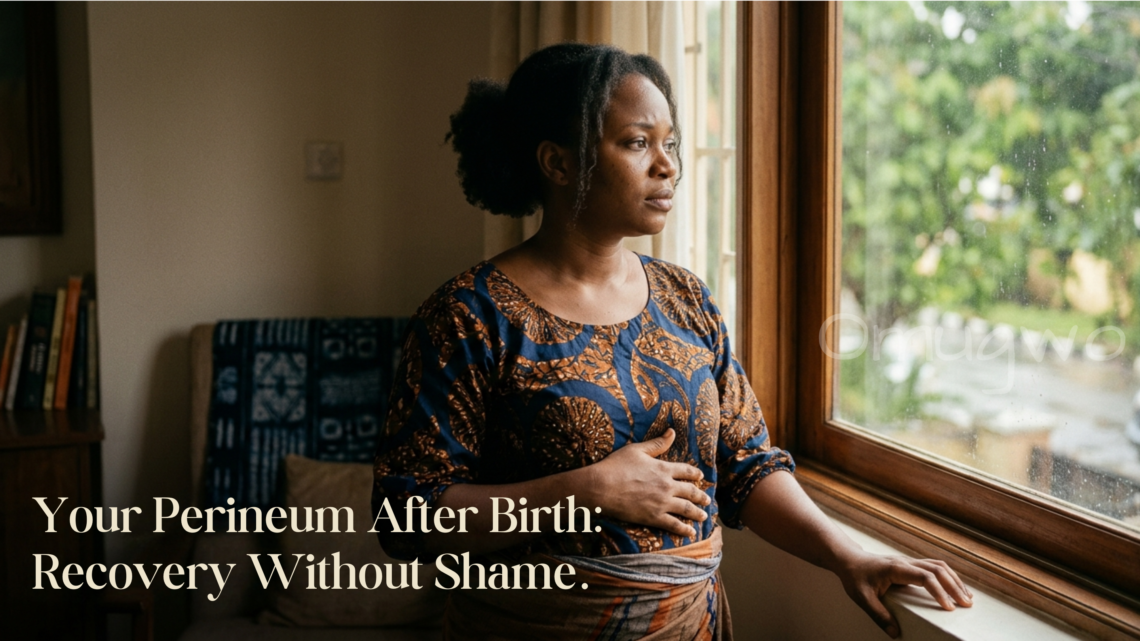
Your Perineum After Birth: Recovery Without Shame
It has been six months since you gave birth. Your baby is sleeping better. You are sleeping better. You are starting to feel like a human again.

And then your husband touches you the way he used to, and you flinch.
Not because you do not want him. But because the area between your legs still hurts. Not all the time. Just sometimes. During certain movements. When you have been sitting for too long. When you cough or laugh too hard. When he tries to enter you, and your body goes rigid because it remembers pain.
You have not told him exactly why. You have told your doctor at your six-week checkup, and she said everything looks fine. You told your mother, and she said to use hot water. You told one girlfriend, and she said this happened to her too but she just got used to it.
So you have been getting used to it. Alone. Thinking maybe you are overreacting. Maybe this is normal. Maybe everyone feels this way after birth and they just do not talk about it.
Maybe your body will never be the same.
The area that the doctor calls your perineum — the space between your vagina and anus — is probably the most taboo part of postpartum recovery in Nigeria. Nobody teaches you about it. Nobody prepares you for what happens to it. And when something goes wrong with recovery, shame keeps you silent.
But something needs to change. Because your perineum matters. Not just for sex. For your whole quality of life. And you deserve to know how to care for it without shame.
What Actually Happens to Your Perineum During Birth
Before we talk about recovery, you need to understand what happened during birth.
Your perineum is stretched. Significantly stretched. If you had a vaginal delivery, that area went from being relatively small and tight to being stretched wide enough for a human head to pass through. The skin stretched. The muscles stretched. The connective tissue stretched. Everything gave way to let your baby come out.
For most women, this stretching causes tearing. The degree of tearing varies. Some women have very small tears that barely bleed. Some have significant tears that go several layers deep. Some women also had an episiotomy, which is a surgical cut that the doctor made to make the opening bigger.
If you tore, you got stitches. The doctor stitched the tear back together, layer by layer. Those stitches were absorbable, so they dissolved over the first few weeks. But the wound itself went through a normal healing process. Scabbing. Itching. Pulling as the scar tissue formed.
This is a real injury. Not a small one. You would not be casual about recovering from any other wound this significant. But because it is in an intimate area, you are supposed to just accept it and move on.
You are not supposed to move on. Your perineum needs care and time to heal properly.
The First Two Weeks: Acute Recovery
Right after birth, your perineum is swollen, tender, and bleeding slightly. If you have stitches, they are holding a fresh wound together. This is the most uncomfortable time, and it is normal to be in significant pain.
What helps during these first two weeks:
Ice and heat, but carefully. In the first few days, ice reduces swelling and numbs pain. You can use an ice pack, a popsicle, or the traditional method of sitting in a bowl of ice water. After the first few days, heat becomes more helpful as swelling starts to reduce and muscles begin to relax. Warm baths or sitz baths (sitting in warm water) help with pain and promote healing.
The key is temperature safety. Water hot enough to help recovery is not water hot enough to burn you. If the water would hurt your hand, it is too hot. Many Nigerian grandmothers know this, but not all. If someone is preparing hot water for you and you are concerned about the temperature, test it first or ask them to make it less hot. Your recovery is more important than cultural adherence to scalding water.
Pain management that works. Paracetamol helps. Ibuprofen helps more, but it might not be available everywhere. You can take these regularly in the first two weeks, not just when pain is unbearable. Do not wait until you are in agony. Manage pain early and consistently. If you are breastfeeding, both paracetamol and ibuprofen are safe.
Pelvic floor rest. This is not a real thing you can do, but the principle matters. Avoid straining when you use the toilet. This means staying hydrated, eating foods with fiber, and using stool softeners if you need them. Constipation is a nightmare after birth, partly because everyone is afraid to push. Use the toilet gently. If you are afraid you will tear your stitches, you will not.
Keeping the area clean but not obsessive. You do not need to do anything special. Regular washing with water is fine. Avoid scented products, douches, and anything “antibacterial” that will disrupt your natural flora. Your body is already managing the healing. You are just keeping it clean.
Weeks Two Through Six: The Uncomfortable Middle
By week two, acute pain usually starts to reduce. But discomfort continues. The area is still tender. The stitches are still there (or in the process of being absorbed). You are still bleeding or spotting. And everything is itchy in a way that makes you want to scratch but you absolutely cannot.
This is the phase where patience becomes essential.
Walking and gentle movement help. You are not supposed to rest completely for six weeks. Gentle walking helps circulation, which helps healing. It also helps psychologically because it gives you a sense of normalcy. Walk as much as you can without pain. If it hurts, you have done too much.
Kegel exercises, but maybe not yet. Pelvic floor exercises are important for long-term recovery. But in the first two to three weeks, your pelvic floor is already traumatized. Squeezing it repeatedly might feel good eventually, but right now it is like pressing on a bruise. Wait until week three or four before you start any pelvic floor exercises.
Accepting that intercourse is not happening. Even though you might be cleared for intercourse at six weeks, your body might not be ready. Some of the pain and discomfort you are feeling will persist beyond six weeks if you do not give yourself time. Many women need eight to twelve weeks, or even longer, before intercourse feels good again. This is normal. There is no timeline you are supposed to follow except the one your body sets.
Wearing comfortable, loose clothing. Tight underwear, tight pants, or anything that puts pressure on the area makes recovery harder. Wear loose clothes. Sleep without underwear if you can. Let air circulate. Your perineum is healing, and it needs freedom to do that.
Six Weeks and Beyond: The Long Recovery
You go to your six-week checkup. The doctor examines you and says everything looks fine. You get cleared for intercourse. Everyone seems to think you are done recovering.
You are not done recovering.
Six weeks is when acute healing is mostly complete. The wound is closed. The stitches are gone. The obvious swelling is down. But the tissue is still healing at a cellular level. Scar tissue is still forming. Nerves are still settling down. And if you had a significant tear or complications, your body might need much longer than six weeks.
The Reality of Pain After Intercourse
This is the conversation that does not happen enough. Many women have pain during or after intercourse for months after birth. Sometimes for a year or longer. And they think they are alone. They think they are broken. They think their body will never be normal.
You are not alone. This is incredibly common.
The pain can feel like:
A sharp, tearing sensation when your partner enters you. This is usually scar tissue or pelvic floor muscles that are still tight.
A deep ache or pressure during intercourse. This can be from scar tissue or from the pelvic floor not fully relaxed.
Pain the next day after intercourse. This is inflammation of tissue that is still healing.
A feeling of being torn again, even though you are not actually tearing. This is usually psychological, your body remembering pain and bracing for it to happen again.
Any of these can persist for months. And any of them is a valid reason to pause intercourse and wait longer.
What Helps During Long Recovery
Scar tissue management. Once you are a few weeks past birth, massage of the scar tissue can actually help it heal better. You or your partner can gently massage the area. Use warm oil (coconut oil, vitamin E oil, regular massage oil). Start very gently. The goal is not to break anything open. The goal is to encourage the scar tissue to become more flexible and less tender.
Do this a few minutes at a time. Not during the heavy bleeding phase. Once you are mostly healed, regular gentle massage can reduce pain and improve flexibility. This can take weeks or months, but it works.
Pelvic floor physical therapy, if you can access it. In Lagos and other major cities, pelvic floor physiotherapists exist. They are expensive. But if you have persistent pain, they can identify whether your pelvic floor muscles are too tight, too weak, or not coordinating properly. They can teach you specific exercises to address your particular problem. This is more effective than generic Kegel exercises for many women.
If you cannot access a physiotherapist, breathing exercises help relax the pelvic floor. Deep breathing, where your belly expands as you breathe in, naturally relaxes pelvic floor muscles. Many women hold their pelvic floor tight (think of it like clenching your fist) without realizing it. Learning to relax it is half the battle.
Lubrication, generously. Once you start trying intercourse again, use more lubricant than you think you need. Your pelvic floor might not be producing as much natural lubrication yet, and that is okay. Water-based lubricant or coconut oil helps everything go smoother without pain.
Communication with your partner. This is the conversation that feels impossible to have. But it is necessary. “I am still having pain with intercourse. It is not because I do not want you. My body is still healing. I need us to go slower. I need you to stop if I say stop. I need you to not take this personally.”
A good partner will understand. A partner who makes you feel guilty for having pain or pressure you into intercourse before you are ready is showing you something important about how he will treat you during other hard moments. Pay attention to this.
Accepting that some positions hurt and others do not. Your body will tell you what works. Some positions put pressure on scar tissue or the pelvic floor in ways that hurt. Other positions feel fine. Until you are fully healed, stick with positions that do not hurt. There is no rush.
The Deeper Recovery: Scar Tissue and Sensation
By three months postpartum, most visible recovery is complete. By six months, you are well healed. But there is a kind of recovery that takes longer, and this is the one nobody talks about.
Scar tissue can affect sensation. The area might feel numb in some spots and hypersensitive in others. This can be uncomfortable and confusing. Is this permanent? Will I ever feel normal again?
Usually yes. But it takes time. Sensation changes gradually over months and into the first year. Scar tissue becomes less prominent. Nerves settle down. Your body relearns how to feel in that area.
Gentle massage, as mentioned, helps this process. So does patience. So does time.
There is also the psychological recovery. Your body went through trauma. Even if the birth was not particularly difficult, your body experienced significant stretching and potential tearing. Your nervous system knows this. It might be protective of that area for longer than you expect. You might flinch during intimacy even when it does not hurt physically. Your body is remembering and protecting you.
This is normal. It does not mean you are damaged. It means your body is smart enough to protect itself. With time and gentle exposure (not forced exposure), this protective response usually fades.
When to Actually See a Doctor
Most postpartum perineal pain resolves with time and care. But some situations need medical attention.
See a doctor if:
You have increasing pain or swelling after the first two weeks, when things should be getting better. This could indicate infection.
You have discharge that smells bad or looks abnormal. This could be infection.
You have opening of stitches or the wound seems to be tearing open again. This needs professional care.
You have pain during intercourse that persists beyond six months and does not improve with time, lubrication, or position changes. This might be vaginismus or pelvic floor dysfunction that needs professional intervention.
You have the feeling that your perineum is bulging or not supporting your pelvic organs. This could be pelvic floor weakness.
You are unable to control urine or feces, or have significant leakage. This is pelvic floor dysfunction that needs professional help.
Do not wait to be cleared for intercourse before seeing someone about pain. Do not assume pain is permanent. And do not assume you are alone. Many women deal with this, and many of them get help.
The Cultural Piece: Hot Water and Traditional Remedies
In traditional postpartum care, hot water is a staple. And there is actually something to it. Heat does help with healing, circulation, and pain management in the early weeks. The issue is temperature and consistency.
Water at a safe temperature (warm, not scalding) can help. Sitting baths with herbs like uziza or bitter leaf might help, though the scientific evidence is limited. The ritual itself, the attention to your recovery, the deliberate care — these things matter psychologically and might matter physically too.
But hot water cannot fix scar tissue months later. It cannot treat infection. It cannot restore sensation. It is helpful in early recovery, but it is not a complete solution for long-term recovery.
Similarly, herbal remedies that grandmothers recommend might have some benefit, but they cannot replace actual healing time. Your body needs time. It needs patience. It needs gentle care.
The cultural wisdom is not wrong. It just is not complete. You can use hot water and herbs in the early weeks while also being realistic about what they can do.
Talking About This Without Shame
This is the hardest part. Because talking about your perineum is difficult in Nigerian culture. It is private. It is intimate. It is not something you discuss with your mother-in-law or your husband or your doctor.
But you need to.
If you are having pain during intercourse, your husband needs to know. Not because you are accusing him of causing it. But because intercourse involves both of you, and he needs to understand that your body is still healing. He needs to know that this is not rejection. It is recovery.
If you are having long-term pain or sensation changes, your doctor needs to know. Even if it feels embarrassing. Postpartum perineal pain is so common that your doctor will not be surprised. They will have seen it many times. And they can actually help.
If you are struggling psychologically with what happened to your body during birth, a counselor or therapist needs to know. Birth trauma, even birth that went “normally,” can affect how you feel about your body and your sexuality. You do not have to carry this alone.
The Bottom Line
Your perineum is not shameful. Birth is not shameful. Your body’s recovery is not shameful. Pain is not shameful. Needing time is not shameful.
What happened to your perineum during birth was real. It needs real care and real time. Not six weeks. Not eight weeks. Whatever time your individual body needs.
You deserve recovery without pain. You deserve intimacy that feels good. You deserve to trust your body again.
And if your body is not there yet, that is okay. Your body is still healing. You just have to be patient with it, and give it what it needs.
If this resonates with you, talk to someone about it. Your partner. Your doctor. A friend who has been through it. You do not have to figure this out alone. And if you have wisdom about perineal recovery that helped you, share it in the comments. So many women need to know they are not alone.