After you give birth, the bleeding starts. And it does not stop for weeks.
This is not something anyone warns you about properly. You might have heard the word “lochia” if you paid attention in antenatal classes. You might have seen something vague in a pamphlet about “heavy bleeding for the first few days.” But nothing really prepares you for what lochia actually looks like, how long it actually lasts, or what counts as normal versus what means you need to call a doctor immediately.
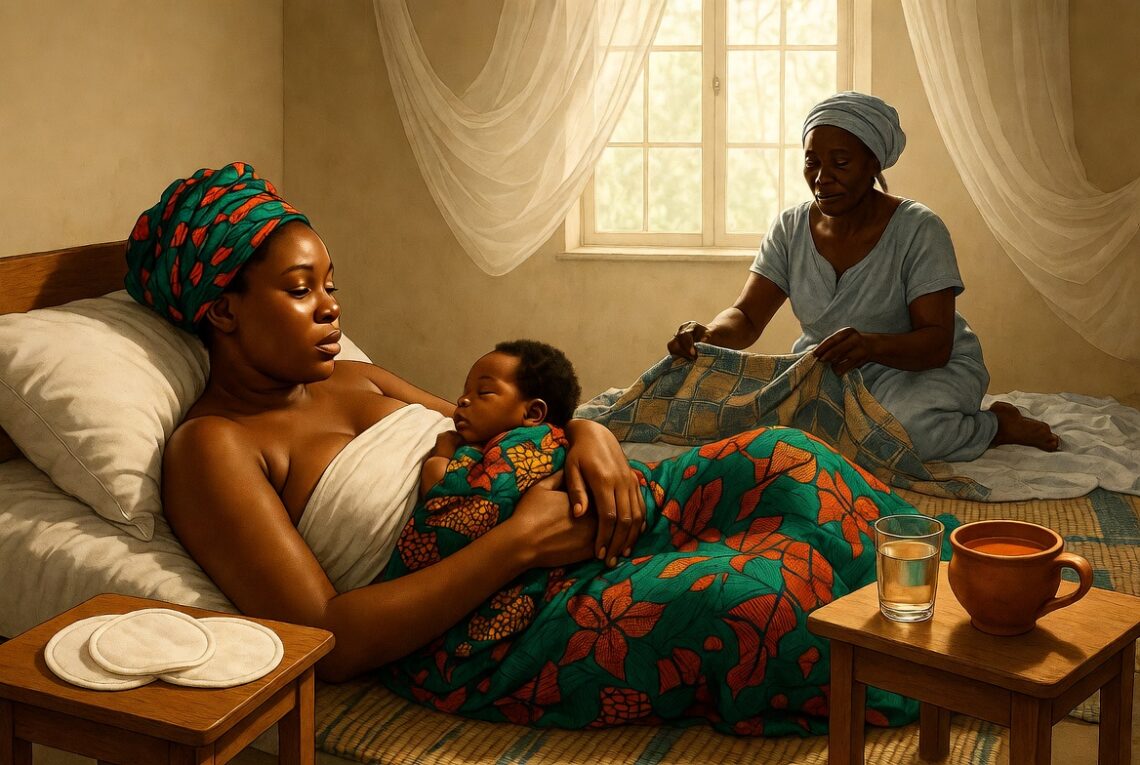
Your mother arrives with cloth and more cloth. Your mother-in-law mentions blood washing and the need to stay warm. Your nurse says something about passing clots. And you are lying there with your legs shaking, bleeding in a way that feels both completely normal and absolutely terrifying.
This is what you actually need to know about postpartum bleeding in Nigeria. Not the version that scares you. Not the version that minimizes it. The actual version.
What Is Lochia?
Lochia is the medical name for postpartum bleeding. It is not menstrual bleeding. It is not a sign that something is wrong. It is the body’s way of cleaning out the inside of the uterus after the placenta has separated.
When you give birth, whether vaginally or by caesarean section, you have a wound inside your uterus where the placenta was attached. That wound bleeds. The uterus also has a lining that needs to be shed. The body expels blood, tissue, bacteria, and other material through the cervix and vagina.
This is lochia. And it lasts much longer than most first-time mothers expect.
The Three Stages of Lochia
Lochia does not look the same for the entire time you are bleeding. It changes. Understanding the changes helps you know what is normal and what is not.
Stage One: Lochia Rubra (Red Lochia)
This is the first stage, and it lasts about three to five days after birth.
During lochia rubra, the bleeding is heavy. Bright red. It might contain small clots, some tissue pieces, or fragments that look like liver. This can be alarming if you are not expecting it. It is not alarming. It is what your uterus is supposed to be doing.
Heavy bleeding in the first few days means your uterus is contracting properly. It means the wound is open and the body is cleaning itself out. This is a good sign.
How heavy is heavy? During lochia rubra, you might soak through a pad every hour or two. You might pass clots the size of a plum. You might need to change your underwear or use the traditional cloth methods frequently. This is the expected range for normal postpartum bleeding.
It is common for the bleeding to be heavier when you first wake up or stand after lying down for a while. The blood has been collecting in the uterus while you rest, and movement encourages it to flow out. This is normal.
Stage Two: Lochia Serosa (Brown or Pink Lochia)
After about five to ten days, the bleeding changes colour. It becomes darker, more brownish or pinkish-brown. It also becomes less heavy.
During lochia serosa, you are moving from the heavy bleeding phase into the moderate bleeding phase. You might soak a pad every four to six hours, or you might need padding less frequently. The colour change indicates that the active wound bleeding is decreasing and you are now passing more of the tissue lining and other material from the uterus.
Lochia serosa usually lasts about one to two weeks. Some mothers might still experience small clots during this phase, but they tend to be smaller than during lochia rubra.
Stage Three: Lochia Alba (Yellowish-White Lochia)
After about ten to fourteen days, the bleeding changes again. It becomes much lighter, more yellowish or white in colour. It might look more like a discharge than bleeding.
During lochia alba, the bleeding is minimal. You might only need a light pad or liner. Some days you might not notice much discharge at all. Other days, especially if you have been active or exert yourself, the discharge might increase slightly and become a bit darker.
Lochia alba can last anywhere from two to six weeks, depending on the individual. Some mothers stop experiencing it after three weeks. Others continue for the full six weeks. Both are normal.
The colour might fluctuate slightly during this stage. It might be creamy white one day and light brown or pinkish the next, especially after activity. This is normal. The colour has stabilized from the bright red of the first days, which is the key marker of this stage.
How Heavy Is Too Heavy?
This is the question that matters most, because heavy bleeding can be dangerous.
In the first three to five days after birth, heavy bleeding is normal. You might soak through a pad every hour. You might pass multiple clots. You might bleed through to your clothes if you are not careful with padding. This is the expected range.
But there is heavy bleeding that is normal, and there is bleeding that is too heavy and means you need immediate medical care.
Bleeding is too heavy if:
You are soaking through more than one pad per hour for more than a few hours. This is different from the first day when you might soak through pads frequently. If on day three, four, or five you suddenly start soaking through a pad every hour when the day before it was every two hours, that is a change that needs attention.
You are passing clots larger than a golf ball. Small clots the size of a plum or even a small walnut are normal in the first days. Clots much larger than that, or multiple large clots, indicate that the uterus might not be contracting properly.
The bleeding is worsening instead of improving. By day five, lochia should be moving from very heavy to moderate. If the bleeding seems to be getting heavier instead of lighter, that is a sign that something needs checking.
You are feeling dizzy, faint, or unusually weak. Heavy bleeding can cause low blood pressure and low iron. If you cannot stand without feeling like you might faint, if you are unusually weak, if your heart is racing, these are signs of blood loss that is more than your body can manage at this moment.
You are passing clots with a very foul smell or the discharge has a foul odour that is getting worse. Some vaginal odour after birth is normal. Lochia has a smell, yes. But if the smell is extremely bad or foul, this can indicate infection.
Any of these signs means you need to contact a healthcare provider or go to a hospital or clinic immediately. Do not wait. Do not assume it will resolve on its own. Excessive postpartum bleeding is one of the leading causes of maternal death globally, and it is preventable when caught and treated quickly.
What About Blood Clots?
Clots worry mothers more than anything else about postpartum bleeding. You pass a large, dark, gelatinous clump and you think something is terribly wrong.
Most of the time, clots during the first few days are normal. The uterus is bleeding from the placental site, blood collects in the uterus while you rest, and when you stand or move, the blood flows out in clots.
Small to medium clots, about the size of a plum or walnut, in the first three to five days, are normal.
Clots larger than a golf ball, or many large clots, need attention. This can indicate that the uterus is not contracting well enough, and you might need intervention to help it contract.
If you are passing very large clots frequently, or if you are passing large clots and the bleeding is also very heavy, contact a healthcare provider.
Things That Affect How Much You Bleed
Not all mothers bleed the same amount. Several things influence how heavy your postpartum bleeding is.
Type of Delivery
Vaginal delivery and caesarean delivery result in different amounts of bleeding. After a vaginal delivery, lochia is typically what has been described above. After a caesarean section, bleeding might be slightly different because the placenta has been removed through the surgical incision rather than being expelled vaginally. The bleeding might be slightly less initially, but it still follows the same lochia stages.
Breastfeeding
When you breastfeed, oxytocin is released. Oxytocin causes the uterus to contract. A contracting uterus bleeds more initially, but the contractions help the uterus return to normal size faster, which ultimately reduces the total bleeding time.
Mothers who breastfeed might experience slightly heavier bleeding in the first few days, but the bleeding might resolve faster overall. Mothers who do not breastfeed might have lighter bleeding initially, but it might take longer for the uterus to fully contract.
Multiple Births
If you gave birth to twins, triplets, or more, the uterus was larger and has more lining to shed. Postpartum bleeding is typically heavier after a multiple birth.
Complications During Delivery
If you experienced complications during labour or delivery, such as retained placental tissue or uterine rupture, bleeding patterns might be different. This is another reason why medical attention is important if something seems unusual.
Your Overall Health
Your general health, nutrition, and whether you have any bleeding disorders affects postpartum bleeding. If you tend to bruise easily or have a family history of bleeding disorders, inform your healthcare provider.
Managing Lochia at Home
Proper management of lochia is important for comfort, hygiene, and to catch problems early.
Padding and Protection
In Nigeria, many mothers use cloth padding, which is fine if the cloth is clean and changed frequently. If you use disposable pads, choose ones designed for heavy bleeding in the first few days, then switch to regular or light pads as bleeding decreases.
Change your padding frequently. Do not leave the same cloth or pad in place for hours. This increases the risk of infection and makes it harder to judge how much you are actually bleeding. Frequent changes also mean you notice any sudden changes in bleeding amount or colour.
Hygiene
Keep the area clean. Wash gently with water after using the toilet. Pat dry with a clean cloth. Do not douche, do not use vaginal washes, and do not insert anything into the vagina. The vagina is self-cleaning and the postpartum vagina is extra sensitive.
Warmth and Rest
The traditional practice of keeping the mother warm and rested is genuinely helpful for postpartum recovery. Heat increases blood circulation in a way that supports healing. Rest allows the body to focus on recovery rather than activity.
Staying warm, resting frequently, and avoiding heavy physical activity in the first two weeks helps your uterus contract properly and reduces excess bleeding.
Iron and Nutrition
Blood loss means iron loss. Eating iron-rich foods helps your body replace the iron and prevent postpartum anaemia. Traditional postpartum foods in Nigeria often include iron-rich options like pepper soup with meat and organs, which is exactly what your body needs.
If you are feeling unusually tired, weak, or dizzy after the first week, mention it to your healthcare provider. Postpartum anaemia is common and treatable.
Stay Hydrated
Drink enough water and fluids. Blood loss is loss of fluid, and your body needs water to make new blood. Also, if you are breastfeeding, you need more fluid than usual.
When Bleeding Continues Past Six Weeks
Most mothers stop having lochia by six weeks postpartum. Some continue slightly longer, especially if they are breastfeeding.
But if you continue to have noticeable bleeding or discharge beyond six weeks, or if bleeding that had stopped suddenly starts again, contact your healthcare provider.
Continued bleeding can indicate infection, retained placental tissue, or other postpartum complications that need treatment.
Signs You Need Medical Attention Right Now
Do not wait. Do not assume it will get better. Do not ask a relative first. Contact a hospital or clinic or call an emergency number if:
You are soaking through one or more pads per hour for several hours, or you suddenly start bleeding heavily after it had decreased.
You are passing blood clots larger than a golf ball, or passing many large clots.
You are experiencing dizziness, fainting, extreme weakness, or rapid heartbeat along with heavy bleeding.
The bleeding has a strong, foul odour, or you have a fever.
You have severe abdominal pain along with heavy bleeding.
You are bleeding enough that you are concerned about blood loss or anaemia.
These are signs of postpartum complications that need immediate medical evaluation. Excessive bleeding after birth is treatable when caught early. It becomes life-threatening when delayed.
You Are Not Overreacting
One of the hardest things about the postpartum period is knowing when something is actually wrong versus when it is just the normal weirdness of a body that has just given birth.
If you are concerned about your bleeding, you are not overreacting. If something feels different or wrong, say it. If you have questions, ask them. If you want your bleeding checked, ask for that.
The people around you might reassure you that everything is normal. They might be right. But the only person who truly knows how much you are bleeding and how you are feeling is you.
Trust yourself. If something feels wrong, have it checked. Medical providers would rather see ten mothers who were worried about nothing than miss one mother who had a real problem.
Your body just did something extraordinary. The bleeding is part of the normal recovery process. And if something is off about that process, you deserve to have it taken seriously.
Expecting a baby soon or just postpartum and worried about bleeding? Share this with a friend who needs to know. And remember: if you have any concerns about your bleeding, contact a healthcare provider. You know your body better than anyone.