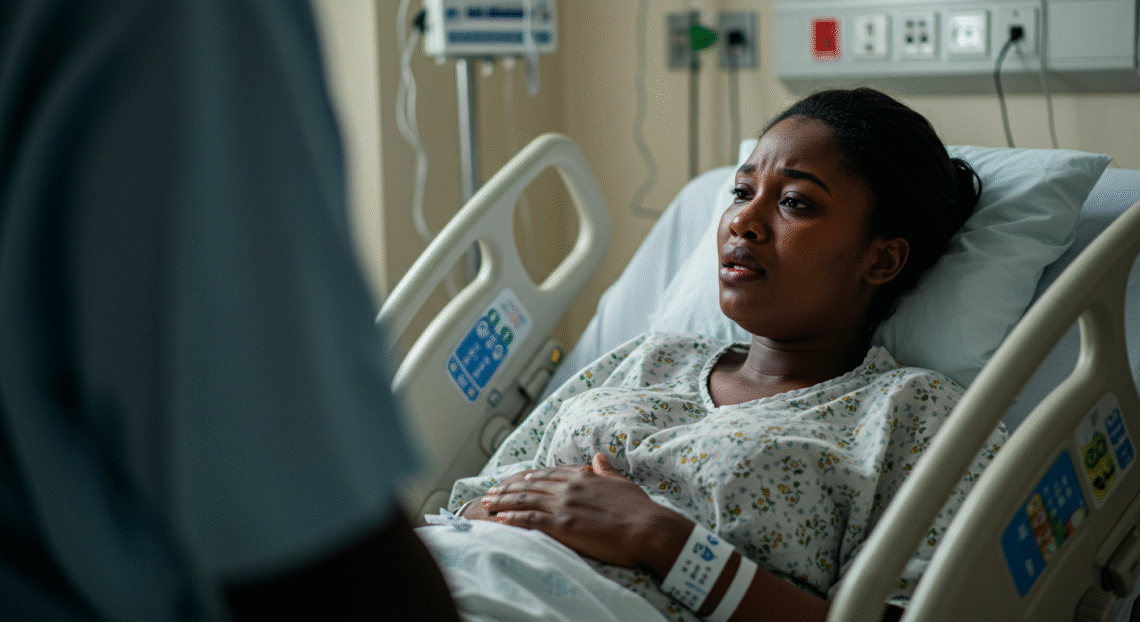
Mama Kemi thought the worst was over when she finally held her baby boy after 18 hours of labor. But three days later, she was rushing back to the hospital, soaking through multiple pads every hour. What she didn’t know was that her “normal” bleeding had crossed into dangerous territory.
In Nigeria, too many new mothers face this same scary situation. The bleeding that comes after giving birth – what doctors call postpartum hemorrhage – causes more maternal deaths here than almost anywhere else in the world. Yet many families don’t know when bleeding becomes an emergency.
What Happens to Your Body After Birth?
Every woman bleeds after delivery. Your body needs to heal where the placenta was attached to your womb, and this takes time. For most women, this bleeding (called lochia) starts heavy and gradually gets lighter over several weeks.
But here’s the problem: in Nigerian communities, many people expect all bleeding to be “heavy” and “normal.” This dangerous belief has led to preventable complications.
When Bleeding Becomes Deadly
Dr. Adebayo Adeniyi, who works at Lagos University Teaching Hospital, sees it too often. “Women come in after bleeding heavily for days because their families told them it was normal,” he explains. “By then, they’ve lost dangerous amounts of blood.”
Heavy bleeding after birth becomes life-threatening when:
- You soak through a large pad every hour for more than two hours
- Blood contains large clots (bigger than a golf ball)
- You feel dizzy, weak, or your heart races
- Your skin becomes pale or cold
- You have trouble breathing
In medical terms, losing more than 500ml of blood after vaginal delivery or 1000ml after cesarean section is considered excessive. But most women can’t measure this at home – they need to watch for warning signs instead.
Why Nigerian Women Face Higher Risks
Several factors make postpartum bleeding more dangerous for Nigerian women:
Limited Access to Quality Healthcare Many women deliver at home or in poorly equipped facilities. When complications arise, getting to a hospital with blood banks and surgical facilities can take hours – time that bleeding mothers don’t have.
Cultural Beliefs About “Normal” Bleeding Traditional beliefs often discourage women from seeking help too quickly. Elderly women in families may insist that heavy bleeding is part of becoming a mother, based on their own experiences from decades ago.
Nutritional Factors Iron deficiency is common among Nigerian women. When you’re already anemic before giving birth, any additional blood loss becomes more dangerous to your health.
Delayed Recognition of Warning Signs Without proper education, many women and their families can’t tell the difference between normal healing and medical emergencies.
Real Stories from Nigerian Mothers
Fatima from Kano had severe complications after her third child. “I was bleeding so much, but my mother-in-law said it was normal because I had a big baby,” she remembers. “When I couldn’t stand up anymore, my husband finally took me to the hospital. The doctor said I almost needed a blood transfusion.”
Blessing’s story from Port Harcourt had a different ending. “My sister is a nurse. She taught me the warning signs before I gave birth. When my bleeding got heavier instead of lighter after one week, I went straight to the hospital. They found pieces of placenta still inside me and removed them safely.”
What Every Nigerian Family Should Know
Immediate Danger Signs (Call for Help Right Away):
- Bleeding that fills a large pad in one hour or less
- Blood clots larger than your palm
- Dizziness when standing up
- Confusion or extreme tiredness
- Fever with heavy bleeding
Normal Bleeding Patterns:
- Starts red and heavy, gradually becomes lighter
- Changes to brown or pink color over time
- Should not require changing pads every hour after the first day
- Should not smell bad or cause severe cramping
Getting Help in Nigeria
If you notice danger signs, don’t wait:
In Lagos: Lagos University Teaching Hospital and Lagos State University Teaching Hospital have 24-hour emergency obstetric care.
In Abuja: National Hospital Abuja and University of Abuja Teaching Hospital provide round-the-clock maternal care.
In Kano: Aminu Kano Teaching Hospital has specialized units for pregnancy complications.
In Port Harcourt: University of Port Harcourt Teaching Hospital offers emergency obstetric services.
For rural areas, contact your local government health centers – they should have emergency transport arrangements to secondary facilities.
Prevention Starts During Pregnancy
Taking care of yourself during pregnancy reduces bleeding risks:
- Take iron supplements if your doctor prescribes them
- Eat iron-rich foods like spinach, beans, and meat
- Attend all prenatal appointments
- Deliver in a proper health facility when possible
- Have a birth plan that includes transportation to emergency care
What Healthcare Workers Are Doing
Across Nigeria, medical professionals are working to reduce maternal deaths from bleeding. Dr. Chioma Okwu from the Society of Gynaecology and Obstetrics of Nigeria explains: “We’re training more midwives to recognize early warning signs and providing better access to life-saving medications like oxytocin.”
Many hospitals now stock misoprostol, a medication that can quickly stop heavy bleeding. Birth attendants are also being trained to start treatment immediately while arranging transport to hospitals.
Supporting New Mothers in Your Community
Everyone can help protect new mothers:
- Learn the warning signs of dangerous bleeding
- Don’t dismiss a woman’s concerns as “normal” without proper assessment
- Ensure transportation is available for medical emergencies
- Support women in seeking medical care when needed
- Share accurate information about postpartum health
The Path Forward
Nigeria has made progress in reducing maternal deaths, but postpartum bleeding remains a leading cause. The solution isn’t just medical – it requires entire communities to understand when bleeding becomes dangerous.
Every Nigerian family should know that while some bleeding after birth is expected, certain warning signs demand immediate medical attention. These complications are preventable when caught in time.
Mama Kemi’s story has a happy ending. After proper treatment for retained placenta, she recovered fully and now helps educate other women in her community about postpartum warning signs. Her experience reminds us that knowledge saves lives.
Take Action Today
If you’re pregnant or know someone who is:
- Discuss postpartum bleeding risks with your healthcare provider
- Create an emergency plan for getting to medical care quickly
- Learn the warning signs before delivery
- Don’t ignore concerning symptoms after birth
Remember: trusting your instincts and seeking help early is always better than waiting to see if bleeding stops on its own. Your life and your family’s future depend on it.