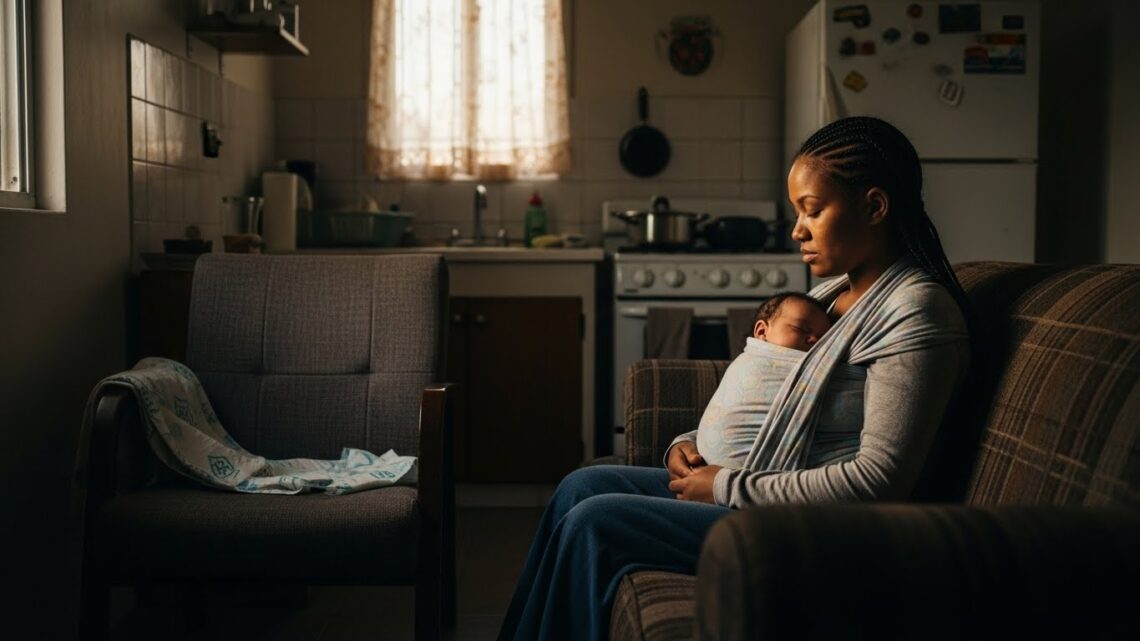

The day has come. Your mother or mother-in-law is packing her bags. The omugwo period is over.
For weeks or months, she’s been there. Cooking your meals. Bathing the baby. Giving you advice. Waking up with you in the night. Managing visitors. Taking over when you were overwhelmed.
You knew this day would come. You might have even been looking forward to having your space back, to being alone with your partner and baby, to running your own household again.
But now that it’s here, now that you’re watching her leave, something unexpected hits you.
Fear. Grief. Panic. Or maybe relief mixed with terror.
What happens now? How will you manage alone? Who will you call at 2 AM when the baby won’t stop crying? Who will cook while you’re feeding the baby? Who will tell you that you’re doing okay?
Nobody really prepares you for this moment. For the strange mix of emotions when omugwo ends and suddenly, it’s just you.
The Moment She Leaves
You wave goodbye. Close the door. Turn around to face your house.
And the silence is deafening. Or the chaos is overwhelming.
If you’re lucky, the baby is sleeping. The house is clean. You have a moment to breathe and process.
More likely, the baby starts crying the moment she leaves. Like they know. Like they feel the shift in energy, the absence of the experienced hands that held them.
This is your first test. Your first moment of “it’s just me now.”
You pick up the baby. You soothe them. You manage. But there’s a weight to it that wasn’t there before. The weight of being solely responsible. The weight of no backup.
You did it. You handled it. But you also feel the loss of knowing someone else was there if you couldn’t.
The Grief You Didn’t Expect
You might be surprised by how much you miss her.
Maybe you didn’t always get along. Maybe she was overbearing sometimes. Maybe you disagreed on baby care methods. Maybe you were ready for her to leave.
But now she’s gone, and you miss her anyway.
You miss:
- Her hands that knew exactly how to calm the baby
- Her presence in the kitchen, cooking without being asked
- Her voice saying “you’re doing fine, don’t worry”
- Her experience that made everything seem manageable
- Her willingness to wake up in the night so you could rest
- The feeling of not being alone in this
This grief is normal. You can be ready for independence and still grieve the loss of support. You can want your space back and still miss having help.
Let yourself feel it. Call her and tell her you miss her. Cry if you need to. This is a real loss, even if it’s also a natural transition.
When Relief and Terror Mix
Some mothers feel primarily relieved when omugwo ends.
Finally, your house is yours again. You can parent your way. You can make your own decisions. You can establish your own routine. You don’t have to navigate another adult’s preferences and opinions.
But the relief often comes with terror.
“I’m relieved she’s gone, but what if I can’t do this alone?” “I’m glad to have my space, but who will help me now?” “I wanted independence, but now that I have it, I’m scared.”
These mixed feelings are completely normal. Independence and capability aren’t the same thing. You can want to do it yourself and still feel overwhelmed by the responsibility.
The First Night Alone
That first night after she leaves might be the hardest.
The baby wakes up crying. You’re the only one who can respond. There’s no one to tap in. No one to take over when you’re exhausted.
You get up. You feed or change or soothe the baby. You do what needs doing.
But the loneliness of it hits differently. The weight of sole responsibility feels heavier in the dark, quiet hours.
You might cry. You might panic. You might call your mother in the middle of the night. You might lie awake worrying about how you’ll survive like this.
Or you might surprise yourself. You might handle it. You might realize you’re more capable than you thought.
Either way, that first night is a milestone. You survived it. You can survive the next one.
What Nobody Does Anymore
Suddenly you realize how much she was doing that you didn’t fully see.
She was cooking three meals a day. You’re now eating cereal for dinner.
She was cleaning without you noticing. Now you see how quickly things pile up.
She was doing laundry continuously. Now you’re running out of clean clothes.
She was managing visitors, setting boundaries, protecting your rest. Now everyone feels free to drop by unannounced and you don’t know how to say no.
She was anticipating the baby’s needs before they cried. Now you’re always reacting, always one step behind.
The invisible labor she was doing becomes suddenly, painfully visible.
This isn’t failure on your part. It’s just reality. One person can’t do what two people were doing. You’re learning that now.
The Cooking Reality
This deserves its own section because for many Nigerian women, this is the hardest part.
Your mother was cooking proper meals. Pepper soup for your strength. Nutritious soups. Jollof rice. Food that sustained you.
Now you’re responsible for feeding yourself, your partner, possibly other children—while also caring for a baby who doesn’t respect meal preparation time.
You might find yourself:
- Eating whatever doesn’t require cooking
- Skipping meals because you don’t have time
- Ordering takeout more than you can afford
- Eating the same simple thing every day
- Crying because you’re hungry but can’t find time to cook
Here’s your permission: it’s okay to simplify. Rice and stew every day. Bread and eggs. Ordered food. Whatever works.
You don’t have to maintain the cooking standard your mother set. She wasn’t also caring for a baby alone. You are.
When Your Partner Doesn’t Fill the Gap
You might have hoped that when your mother left, your partner would step up. That together, you’d manage what she was doing alone.
But often, partners don’t realize how much was being done. They don’t automatically fill the gap.
They go to work and come home expecting meals, clean clothes, a managed household—not realizing you’ve been alone all day with a baby, unable to do any of it.
This creates resentment. You’re exhausted and overwhelmed, and they seem oblivious.
You need to communicate clearly: “I can’t do everything your mother/my mother was doing. I need help. Here’s specifically what I need.”
Don’t wait for them to figure it out. Most won’t. They need to be told explicitly what the gap is and how they can help fill it.
The Decisions That Are Now Yours
During omugwo, every decision had input. Your mother weighed in on feeding schedules, sleep positions, bathing techniques, clothing choices.
You might have chafed at this. You might have wanted autonomy.
Now you have it. Every decision is yours. And that can feel overwhelming.
“Should I take the baby to the doctor for this or wait?” “Is the baby eating enough?” “Am I doing this right?” “Should I try this new approach or stick with what works?”
There’s no experienced voice saying “yes, that’s fine” or “no, try it this way.”
You’re flying solo. And that autonomy you wanted? It comes with a heavy dose of uncertainty.
Trust yourself. You know your baby better than you think. But also know that it’s okay to call and ask. Your mother didn’t disappear just because omugwo ended. She’s still there, just a phone call away.
The Loneliness of Solo Days
During omugwo, your days had company. Another adult to talk to. Someone who understood what you’re going through.
Now your days are just you and the baby.
The hours stretch long. Adult conversation is rare. The silence (between baby cries) is profound.
You might find yourself:
- Talking to the baby like they can respond
- Calling friends just to hear adult voices
- Watching TV for the sound of people talking
- Feeling desperately lonely even though you’re never alone
- Missing the simple presence of another adult
This loneliness is real and valid. Babies are wonderful, but they’re not company in the way adults are.
Find ways to connect: video calls with friends, mothers’ groups, even just going to the market to interact with people. You need adult connection.
When the Baby Won’t Settle
There will come a moment—maybe your first full day alone—when the baby won’t stop crying and you don’t know why.
During omugwo, you could hand the baby to your mother. She would try something you hadn’t thought of. She would reassure you. She would take over when you were at your limit.
Now there’s no one to hand the baby to.
This is when the panic might set in. “I can’t do this. I need help. Why did she leave?”
But you’ll also discover something: you can do it. Not easily, not perfectly, but you can.
You’ll try everything. Something will eventually work. Or the baby will just stop crying on their own. And you’ll realize you survived it.
Each time this happens, you build confidence. You learn that you’re more capable than you believed.
Establishing Your Own Way
Here’s something beautiful that happens after omugwo: you finally get to parent your way.
You were grateful for your mother’s help. But she had her methods, her opinions, her way of doing things. And sometimes her way wasn’t your way.
Now you can:
- Try the parenting approaches you wanted to try
- Make decisions without input or judgment
- Establish routines that work for your family
- Do things differently than you were taught
- Find your own rhythm
This freedom is part of why this transition is bittersweet. You lose support, but you gain autonomy.
You get to discover what kind of parent you actually are, not just who you are with someone watching and advising.
The Practical Adjustments
Life after omugwo requires practical adjustments:
Lower your standards. The house won’t be as clean. The meals won’t be as elaborate. That’s okay.
Create simple systems. Batch cook when you can. Clean one room at a time. Lower your expectations about what “done” looks like.
Ask for help. From your partner, from friends, from neighbors. You don’t have to do this completely alone just because omugwo is over.
Protect your rest. When the baby sleeps, you rest. Dishes can wait. Your body still needs recovery.
Stay connected to your mother. Call her. Video chat. Ask questions. She didn’t stop being your mother just because she left your house.
Be patient with yourself. You’re learning. You’re adjusting. Give yourself grace and time.
When It’s Harder Than You Expected
Some women find the transition after omugwo devastating.
The loneliness is crushing. The responsibility is overwhelming. The loss of support triggers or worsens postpartum depression.
If you’re struggling more than you expected:
You’re not weak. This transition is genuinely hard.
You’re not ungrateful. Missing support doesn’t mean you didn’t appreciate independence.
You’re not failing. Needing help doesn’t make you inadequate.
Reach out. To your doctor. To your mother. To friends. To a therapist. To anyone who can help.
This phase won’t last forever, but you don’t have to suffer through it alone.
The Unexpected Confidence
Here’s what many women discover: after the initial shock and adjustment, confidence comes.
You handle a situation you thought you couldn’t handle alone. You solve a problem without calling for help. You make it through a hard day and realize you survived.
Each small success builds on the last. Each night you manage alone proves you can do this.
The first week after omugwo might be terrifying. The second week might be slightly less so. By the third or fourth week, you might surprise yourself.
You’re becoming the parent you are, not just the parent you are with help.
This confidence isn’t immediate. It’s built gradually, one managed crisis at a time. But it comes.
What Your Mother Knows
Your mother left even though she knows it’s hard. Even though she knows you’ll struggle. Even though she could have stayed longer.
She left because she knows something you’re still learning: you can do this.
She left because staying longer would make the transition harder, not easier. Because you need to find your own way. Because her job was to launch you, not to stay forever.
She left trusting that she taught you enough. That you’re ready, even if you don’t feel ready.
And when you call her crying because you can’t do it, she’ll remind you: you already are doing it.
Building Your Village
Just because omugwo is over doesn’t mean you have to be completely alone.
Start building your own village:
- Connect with other new mothers
- Hire help if you can afford it, even occasionally
- Ask your partner to take specific responsibilities
- Lean on friends who offer support
- Join mother-and-baby groups
- Find online communities of people in the same phase
Omugwo is a specific cultural practice, but the need for community continues. Find your people. Build your support network. You don’t have to recreate omugwo, but you do need connection and help.
For the Mothers in the Middle of This
If you’re reading this in the days or weeks after your mother left, if you’re overwhelmed and scared and missing the support you had, hear this:
You will adjust. Not immediately. Not without struggle. But you will find your rhythm.
You will learn to manage alone. You will discover capabilities you didn’t know you had. You will surprise yourself with your resilience.
You will also continue to need help. Needing support doesn’t stop when omugwo ends. Keep asking. Keep connecting. Keep reaching out.
The end of omugwo isn’t the end of support. It’s just a transition to a different kind of support.
What Comes Next
Life after omugwo is different. Not better or worse, just different.
You have more autonomy but also more responsibility. More freedom but also more exhaustion. More independence but also more loneliness.
You’ll figure out your own rhythms. You’ll develop your own methods. You’ll become the parent you’re meant to be.
You’ll probably call your mother more than you expect. You’ll ask her questions. Seek her reassurance. Tell her you miss her.
And slowly, day by day, you’ll grow into this role. You’ll learn to trust yourself. You’ll discover that you’re stronger than you knew.
The quiet (or chaos) after your mother leaves won’t last forever. You’re in transition. And transitions are hard.
But you’re not alone in this. Every woman who has experienced omugwo has faced this moment. The moment of watching her mother leave and wondering how she’ll manage.
They survived it. You will too.
One day at a time. One feeding at a time. One crisis at a time.
You’re doing better than you think. And your mother knows it, even if you don’t yet.